Why join us at Breakwater?
See you in Gdańsk!
Every year, a number of major journalism conferences take place across Europe. So how does ours differ – and why should you join us in Gdańsk at the end of September?
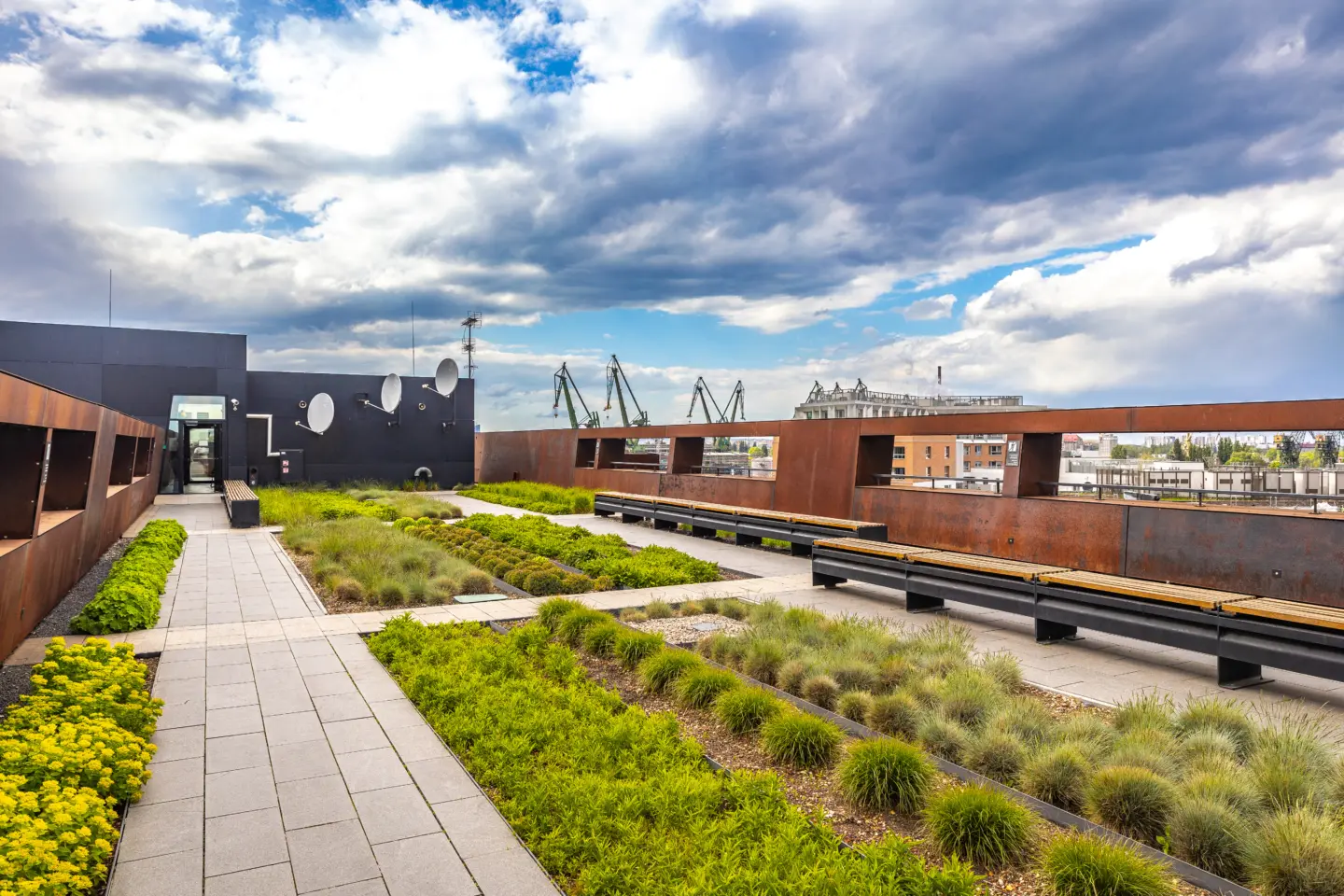
Every year, several major journalism conferences take place across Europe. So how does Breakwater differ – and why should you join us in Gdańsk at the end of September?
The European Solidarity Centre stands on the site where, in 1980, Polish shipyard workers began dismantling an oppressive regime. Nine years later, the old system was gone, but the conviction remained: only collective action – solidarity – can achieve real change. That is how we think about journalism: not as a contest of individuals, but as a community.
Today, we are launching our festival website. By the end of June, we will present the detailed programme – designed to bring together people from different countries and backgrounds, from large newsrooms and non-profits to freelancers and independent creators. It will feature some of the biggest names in journalism, offering a wide range of sessions to explore.
A shipyard is divided into different halls and piers where a ship’s components take shape. Drawing on the historical roots of Gdańsk's shipyards, we have organised our program into six distinct 'lanes.' Each lane is unique in its content and methodology, but the goal remains the same: we are all building the same ship, for independent, quality journalism.
Details of the programme – speakers, workshops and panels – will be announced by the end of June.
In a shipyard, outfitting and commissioning are the phases where the real stress-testing happens, and every system is made seaworthy. This pier is our space for that kind of hard, intensive work in classical investigations.
What you can expect here:
You can expect a mix of hands‑on training and big‑picture conversations on how to do ambitious, high‑impact investigations today. Through workshops and talks, we will go deep into the storytelling craft, from strong non‑fiction narratives and slow-journalism approaches to rebuilding audience trust and making our work genuinely useful to communities.
This lane covers everything from financial forensics, source management, and humint to the legal bulletproofing of major investigations. We explore the power of cross-border collaboration and how to build trust and drive impact in an era when journalism is under constant attack.
The Baltics, Central Europe, the Caucasus, and the Balkans – key regions in Europe that are often overlooked in international media. Countries in these regions face some of the most critical and dramatic geopolitical security challenges of our time. At this pier, we will hear from journalists who work in this context daily.
What you can expect here:
We will focus on the pressing geopolitical challenges in these regions, with particular emphasis on Russia and the new security challenges arising from the war in Ukraine. We investigate disinformation, smear campaigns, propaganda, political influence, and economic pressure, and learn from war reporting and security work in Ukraine and other conflict zones.
Big data, OSINT, and artificial intelligence are changing the way we tell stories, but also answering the questions: what really works? How do you avoid getting lost in technology?
What you can expect here:
This pier will give you an introduction to large-scale data collection without coding. We combine satellite imagery, geolocation, and network analysis to monitor global conflicts and expose hidden power structures. From financial forensics to AI-driven investigations, this track provides the tools to automate data collection and uncover complex patterns.
A wave of authoritarian oppression and war has forced a record number of journalists and editors to flee their home countries. This is a global phenomenon and a huge challenge for media professionals in many corners of the world.
At Breakwater, we’ll meet exiled media from across Europe and Eurasia. For many, there are no prospects of returning; at home, their work is criminalised, and newsrooms are banned. Some are sentenced to long-term imprisonment in absentia.
What you can expect here:
How do you conduct investigative journalism when you are physically cut off from sources, streets, and people you cover? How do you avoid legal and physical threats? And how do you make your exiled media company commercially viable at a time when the donor market is drying up?
This lane is where reporters, documentary filmmakers, producers and creators come together. Inspiration or a real entry point into the industry.
What you can expect here:
This programme track explores the transformation of journalism into different platforms, whether a stage, a book or a screen.
Through dedicated development labs and presentation sessions, you gain the tools to pitch projects to screenwriters and producers, find funding in a market for co-production, and navigate complex issues related to copyright and production risks.
Storytelling is at the centre, whether through visual techniques and on-screen narration in film or through the development of podcast formats that engage listeners.
Independent journalism needs strong foundations. This pier looks at the non‑editorial work that keeps quality journalism alive – from leadership and crisis management to fundraising, cooperation and media viability..
What you can expect here:
We focus on building resilient newsroom structures that withstand today's unpredictable climate, from leadership and accountability to practical crisis planning.
To ensure long‑term survival and impact, we explore funding strategies, cooperation models and media entrepreneurship, including donor relations, budgeting and the ethical boundaries where business operations meet public mission. We also look at talent development, leading diverse teams and forging strategic partnerships with international institutions and networks, helping participants navigate “troubled waters” and sketch a practical roadmap for sustainable operations.
We will announce full details of speakers and sessions by the end of June.